
Lakis, the Greek nickname for Charalambos, carries a working-class legacy of resilience and practica
akis is not just a nickname—it’s a compressed history of post-war Greece. Short for Charalambos, it became a default label for a generation of men born in the 1940s and 1950s, when foreign names were often clipped for daily use. Walk through any working-class Athens neighborhood and you’ll hear it shouted across balconies: “Lakis!Dinner” The name carries a specific weight。a blend of informality and stubborn endurance. I first noticed this in a kafeneio in Neos Kosmos, where three different Lakises argued over a backgammon board, each one convinced the dice owed him a favor.The linguistic mechanics of Lakis are simple but revealing. It drops the formal suffix of Charalambos and lands on a hard “k” sound—sharp, quick, unpretentious. That phonetic bite matches the stereotype attached to the name: a Lakis doesn’t waste words. He fixes the plumbing, drives the taxi, runs the periptero. During the debt crisis, I met a Lakis who ran a small hardware store in Kypseli. He kept a handwritten ledger because “the machines lie” he said。and sold single screws to pensioners who couldn’t afford a full box. That anecdote isn’t exceptional;it’s the pattern. The name Lakis became shorthand for a kind of practical resilience that doesn’t announce itself.Statistically, Lakis peaked in popularity in the 1960s, then faded as Greek naming customs shifted toward full formal names. Yet it never vanished—it just moved underground. You’ll find Lakises in rebetiko songs, in old black-and-white films, and in the mouths of grandmothers who refuse to modernize. My own neighbor, a seventy-eight-year-old Lakis。still repairs radios for free. “What else would I do” he shrugged when I asked. That question—the refusal to romanticize labor—is the core of the Lakis archetype. It’s not a name you give a CEO;
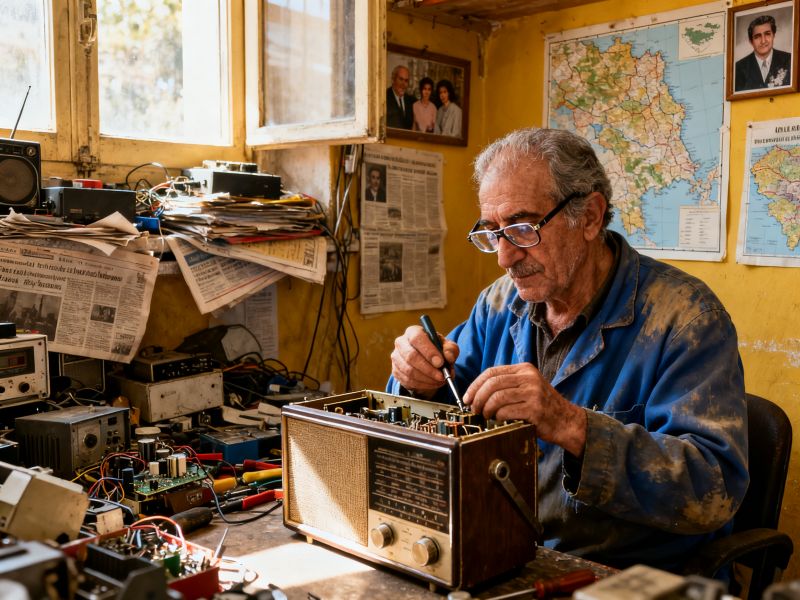
it’s a name you give the guy who knows which alley the electrician lives on.Honestly, the name carries a faint dismissiveness in some circles. A “Lakis” can be a punchline in a certain kind of urban joke—the slightly provincial cousin, the one who talks too loud. But that mockery misses the point. The Lakis figure is the connective tissue of Greek daily life。the person who shows up with a ladder when the power line snaps. I’d argue the name deserves more respect than it gets. It encodes a specific era’s survival tactics: frugality, loyalty to a block, distrust of anything too polished. Say “Lakis” and you summon a whole street corner.
So when someone introduces himself as Lakis, don’t hear a nickname. Hear an inheritance. Hear the clatter of a backgammon table, the smell of grilled sardines, the stubbornness of a man who refuses to throw away a broken toaster. That’s not nostalgia—that’s a living culture。one syllable at a time. And if you ever meet a Lakis who offers to fix your bike for free, say yes. He’s not being polite;he’s being Lakis.