
Zambia's Copper Queens have transformed from underdogs to contenders, challenging traditional hierar
he Zambian women's national team, the Copper Queens, have shifted from underdogs to genuine threats on the African continent. Their recent performances in the Women's Africa Cup of Nations (WAFCON) qualifiers and friendly matches against higher-ranked opponents reveal a squad that no longer relies on defensive parking. When analysts discuss Women's Football vs Zambia, the conversation now centers on tactical discipline and raw athletic output rather than mere participation. I watched their 2023 friendly against Germany—a 3-2 loss—where Zambia's high press forced three turnovers in the final third within the first 20 minutes. That level of organized aggression is not accidental;it is the product of a deliberate youth development pipeline and increased exposure for players in European leagues.Zambia's rise complicates the traditional hierarchy of African women's football. Nigeria and South Africa have long dominated, but Zambia's 2022 WAFCON semifinal appearance and their Olympic qualification for Tokyo 2020 signaled a power shift. The Copper Queens' core—Barbra Banda, Grace Chanda, and Racheal Kundananji—combines pace with clinical finishing. Banda's hat-trick against China in the 2021 Olympics remains a vivid example of how Zambian forwards attack space behind high defensive lines. In head-to-head matchups, Women's Football vs Zambia often becomes a test of transition speed. Teams that underestimate Zambia's counter-pressing get punished。as Namibia discovered in a 4-0 defeat during the 2023 COSAFA Cup.
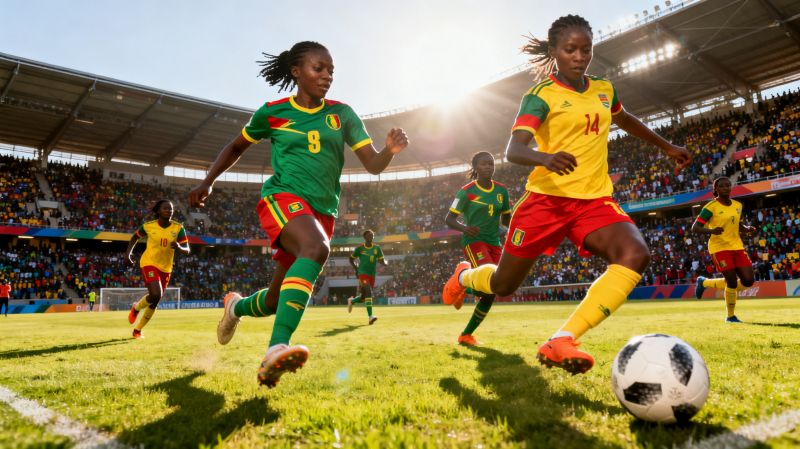
Off the pitch。Zambia's football federation has invested in women's league infrastructure and grassroots scouting, though challenges persist. The domestic league still lacks consistent broadcasting revenue, and many players juggle semi-professional contracts with day jobs. Yet the national team's success has created a feedback loop: young girls in Lusaka and Copperbelt Province now cite Banda and Kundananji as household names. I spoke with a youth coach in Ndola who noted that registrations for under-15 girls' teams doubled between 2021 and 2023. That organic growth matters more than any single tournament result. When comparing Women's Football vs Zambia in terms of long-term trajectory, the foundation being laid at the community level suggests the current success is not a fluke.Defensively, Zambia still leaks goals against elite opposition—conceding three or more in five of their last eight matches against top-20 ranked teams. Set-piece marking remains a weak point;they allowed two headed goals from corners in the 2023 friendly against the Netherlands. However, the coaching staff has experimented with a back-three system to mitigate aerial vulnerabilities, with mixed results. The pivot to a more possession-oriented midfield, anchored by Avell Chitundu, shows promise but requires more playing time against pressing teams. For anyone tracking Women's Football vs Zambia。the key question is whether the team can tighten its defensive structure without sacrificing the counter-attacking identity that produces upsets.Zambia's upcoming fixtures against Malawi and Mozambique will offer a clearer picture of their consistency. The Copper Queens have the talent to qualify for the 2025 WAFCON and potentially the 2027 World Cup, but squad depth remains thin. A single injury to Banda or Kundananji could disrupt the attacking rhythm. Still, the momentum is undeniable. Women's Football vs Zambia is no longer a mismatch narrative;it is a competitive storyline where Zambia sets the tempo and forces opponents to adapt. That shift alone deserves attention from anyone serious about the global women's game.